
Talk by Anna Derriks at Architecture of the Limit: The Conference, Institute of Art History at the University of Cologne
What is a fence?
Finding an answer seems simple enough, just ask a dictionary. Brockhaus states that a fence is the “enclosure of a property”[1], its legal boundary. This is true in some cases. However, walls and hedges can also be used as enclosures, but their characteristics differ significantly.
Brockhaus deals implicitly with the distinction by referring to the material from which fences are made – wood and metal. Even so, although the majority of fences are made of wood and metal, there are enough examples made of concrete and stone – materials more commonly associated with walls. A material distinction between fence and wall therefore does not seem to be productive.
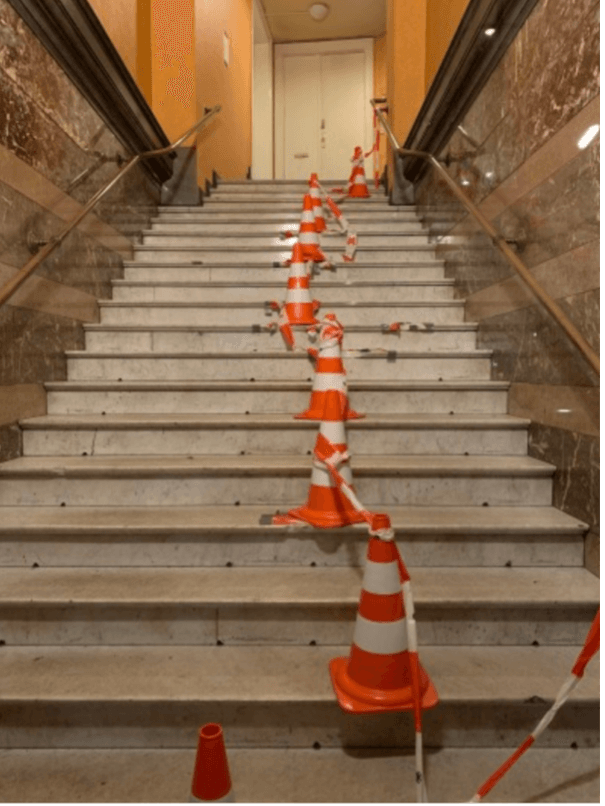
The Encyclopædia Britannica describes a fence somewhat differently, namely as “a structure like a wall built outdoors usually of wood or metal that separates two areas or prevents people or animals from entering or leaving”[2]. Although it is more precise concerning the separating and movement guiding function of a fence, it makes no attempt to distinguish it from a wall. Getting closer to an answer I want to ask instead: Is this a fence? By doing so I turn to the fences themselves to understand what they look like, what they are made of and how they are used. For this purpose, I, together with a group of students, took images of everyday fences. On the basis of this material, I want to offer a preliminary definition.
[1] https://brockhaus.de/ecs/enzy/article/zaun
[2] https://www.britannica.com/dictionary/fence
29 September 2025
10 a.m., University of Cologne