Lecture by Prof. Dr. Adrian Anagnost [Tulane University School of Liberal Arts New Orleans], #2 of the Lecture Series Organizing Architectures: Coloniality
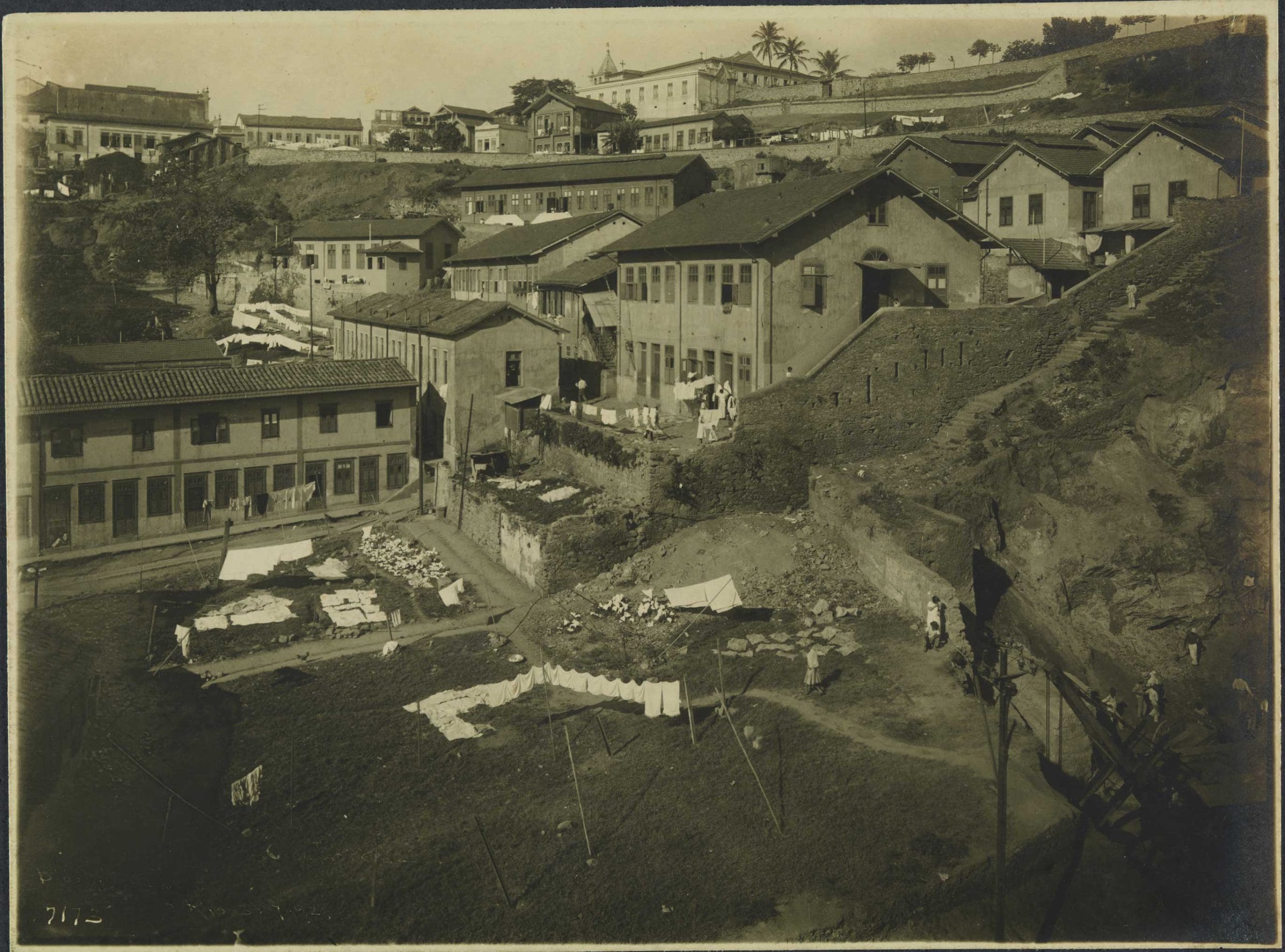
How did the visual and spatial logics of colonial Brazil persist within modern technocratic urbanism? Focusing on Rio de Janeiro’s early-20th-century urban reforms and architectural debates, I argue that the favela emerged as a figure through which elites translated colonial hierarchies of order and disorder into modernist form. From the demolition of Morro do Castelo for the 1922 World’s Fair to the experimental architectural proposals of Flávio de Carvalho and the critical writings of Mário de Andrade circa 1930, the city became a laboratory for reconciling industrial modernity with nostalgic visions of colonial stability. Rather than a break with colonialism, Brazil’s technocratic urbanism recoded the spatial logics of the casa-grande and plantation – hierarchical, paternalist, and racialized – into the visual grammar of modernization. The favela thus became both the symptom and the aesthetic kernel of modern Brazilian urbanism: a site where social inequality was reimagined as a design problem.
The lecture will be held in English.
Members of the Architektenkammer Hessen (AKH) can earn 2 credits points for participating.
10 December 2025
7 – 8:30 p.m.
at Deutsches Architekturmuseum (DAM)
Schaumainkai 43, 60596 Frankfurt