
An evening to discuss the fact that Stadtbilder[1] are multiple. This was our concept for the first event in the Kontroverse Architekturen series, in partnership with the Volkshochschule Frankfurt. We aimed to have an event outside the university walls, not only because it was held at the Stadthaus in the city center of Frankfurt am Main, but also due to the perspectives of our guests. Our panel was composed of Luise Klaus, a human geographer; Katharina Böttger, a curator and urban researcher; and Michel Müller, an architect. Each of them presented Stadtbilder from their own perspectives and practices, offering insights into how such images can be politicized and manipulated representing distinct interests, how they can be materialized in different formats, and how they are produced through architectural practice.
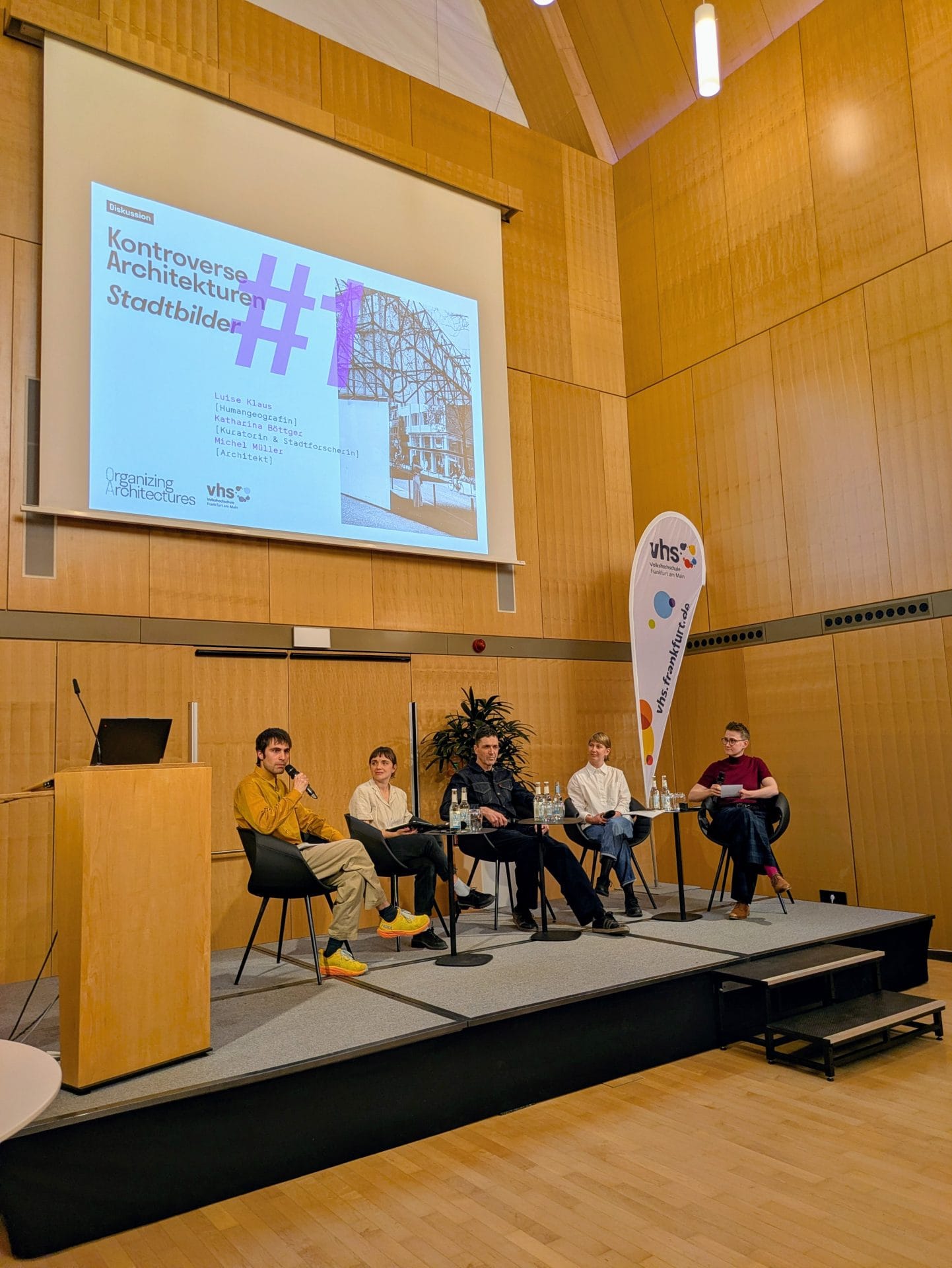
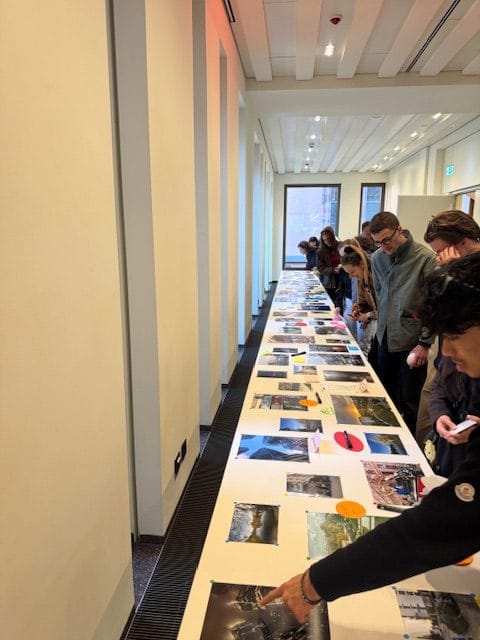
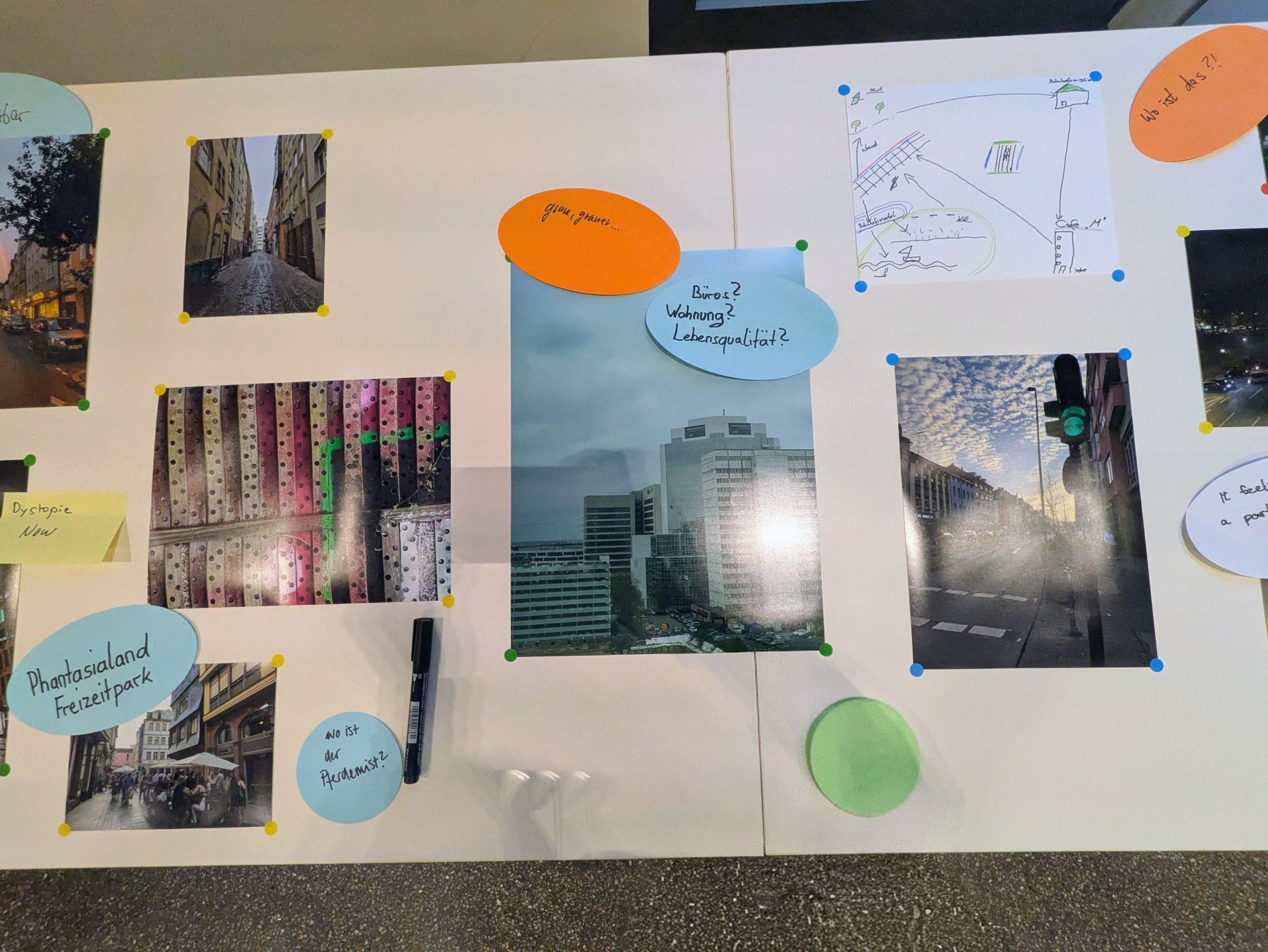
I could describe in more detail our conversation on April 29, but there is another aspect of this evening I would like to highlight: the various Stadtbilder of Frankfurt on display in the foyer. Prior to the event, we collected photos and drawings created by different people depicting their own Stadtbilder. On the day, we arranged them in formats A5, A4, or A3 on tables and created an entrance path so that guests would have to pass by them to reach the main hall, where the panel discussion would take place. At the door, we invited those present to react to the images using colored paper and pens placed on the tables.
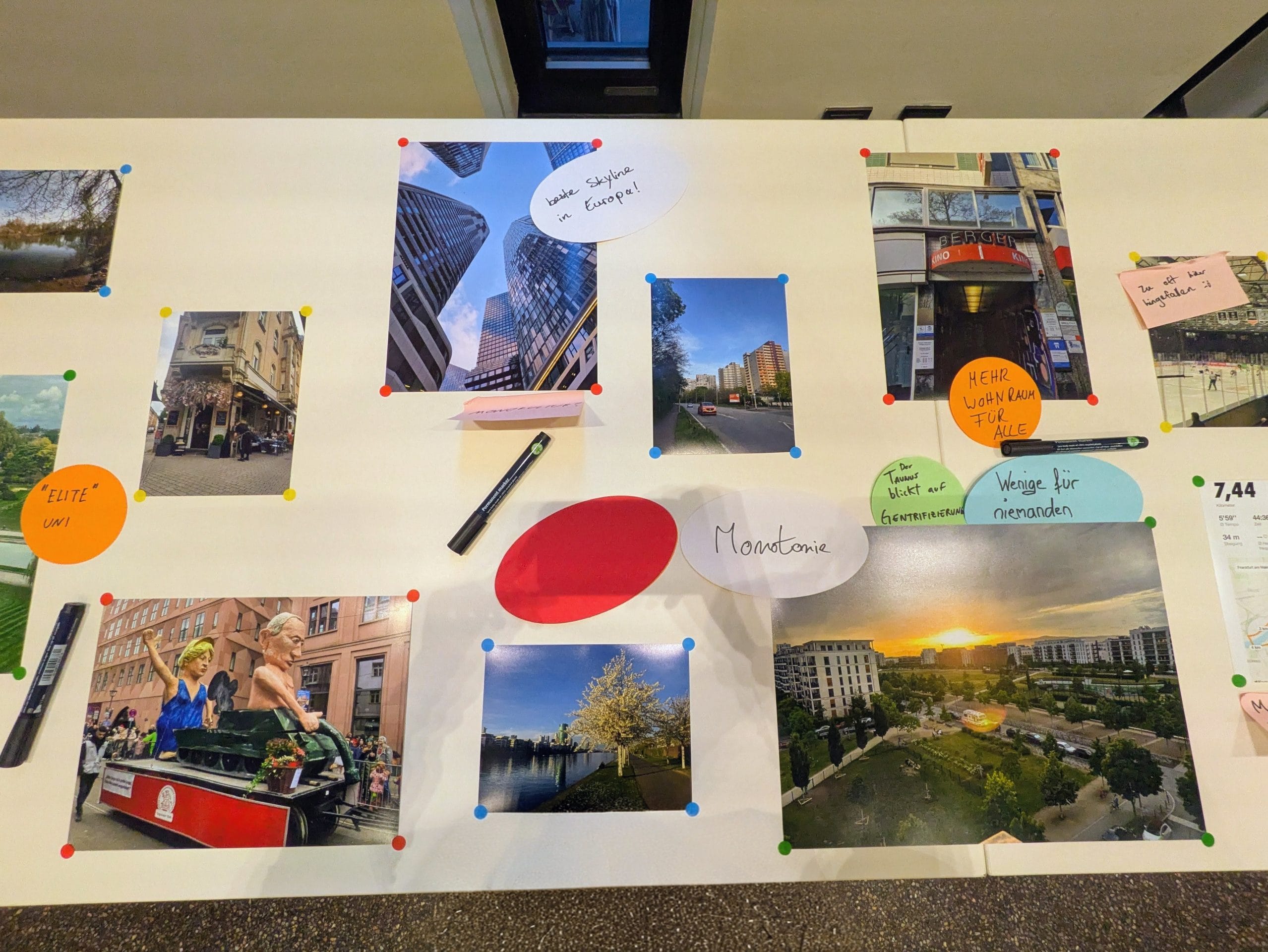
The results were insightful but sometimes also quite amusing! For example, three notes were placed on the photo of the Europaviertel: “Monotonie”, next to “Der Taunus blickt auf Gentrifizierung” and “Wenige für niemanden”, which also reacts to the note “Mehr Wohnraum für alle” placed over the image of Berger Kino above it.
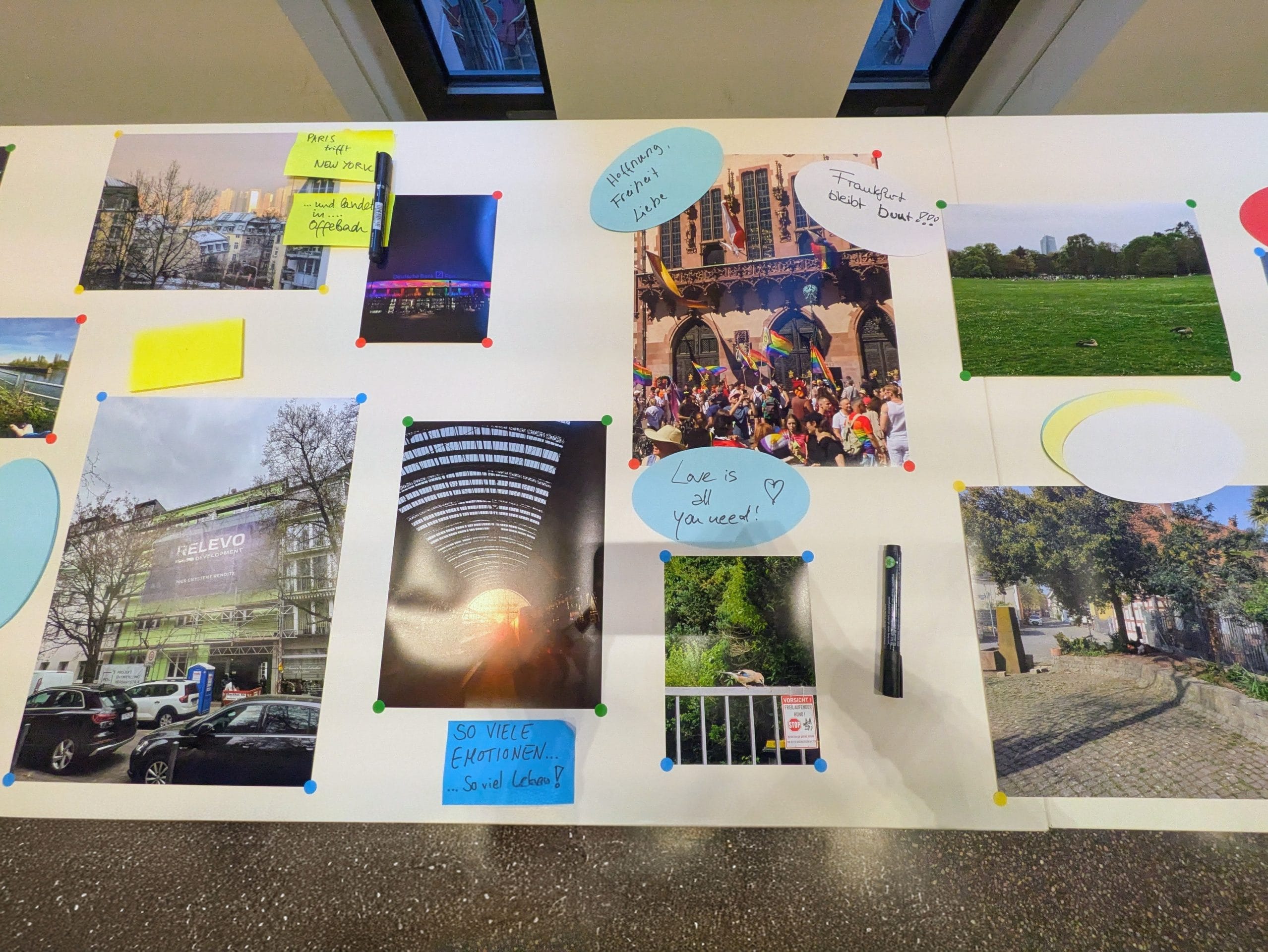
Or take the photo of buildings with snow-covered roofs in the foreground and the gleaming buildings of Frankfurt’s famous skyline in the background, which, in handwriting that seems to be from different people, received two comments: “Paris trifft New York” “… und landet in… Offenbach”.
Meanwhile, the image of the Stadthaus’s immediate surroundings received two comments: “Phantasialand Freizeitpark” and “Wo ist der Pferdemist?”. Both critical of the renovation project of Frankfurt’s old town, the topic of our upcoming event on June 10.
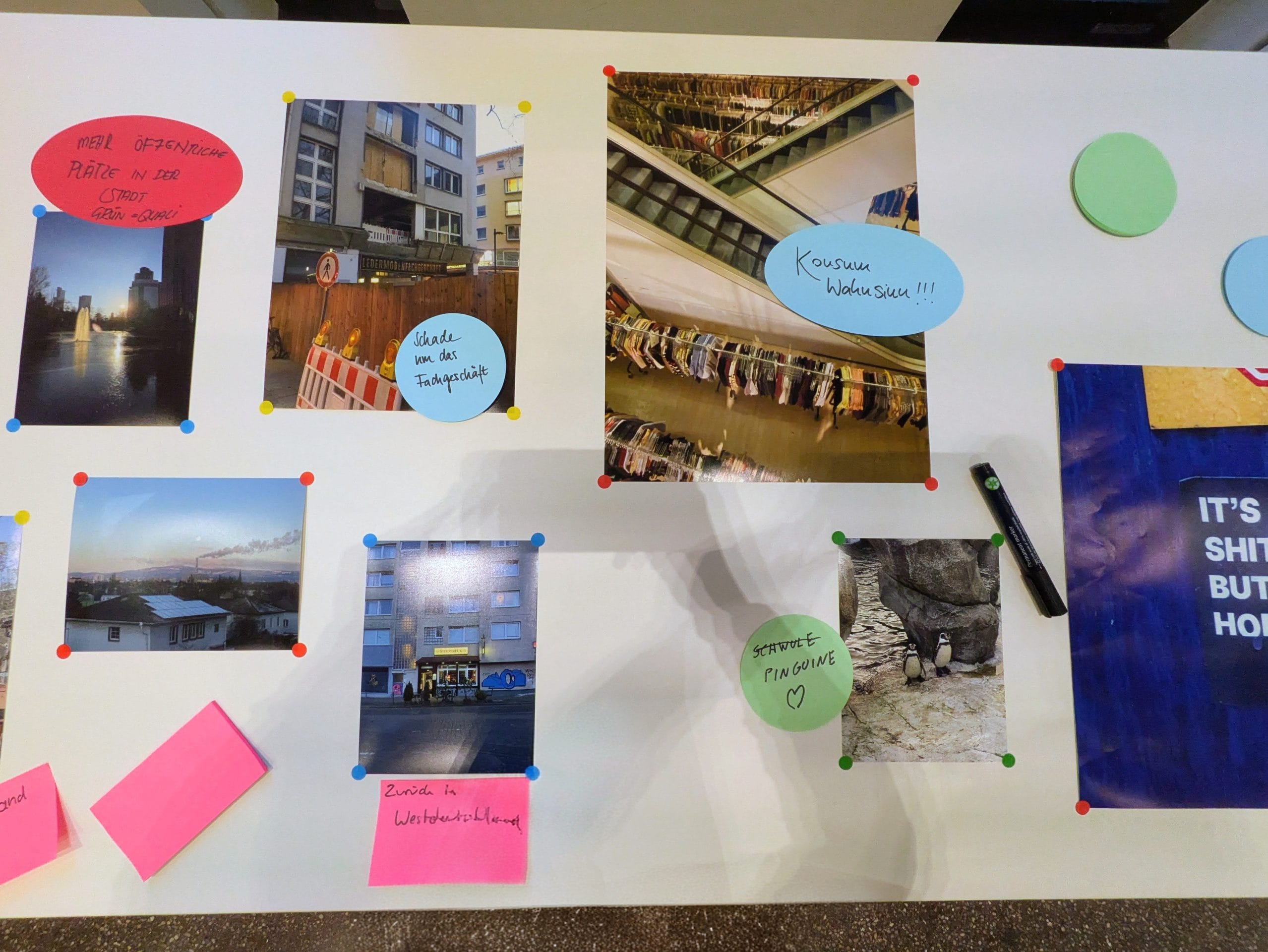
There may also have been other forms of interaction that are not apparent on a posterior analysis. For example, I remember seeing the comment “Schwule Pinguine” on a photo of two penguins standing side by side near the river. At the end of the event, when I photographed the tables, I noticed that someone had crossed out the word “Schwule,” leaving only “Pinguine” and a heart – which I honestly can’t recall if it was there from the start or not.
This makes me wonder if the same thing happened with the comment on a photo of a bicycle next to a table with a glass of beer and the Main River in the background. Did a single person write “Autostadt” and then crossed it out with an X and drew an arrow to the word “Fahrradstadt,” or is this the result of an interaction between two people?
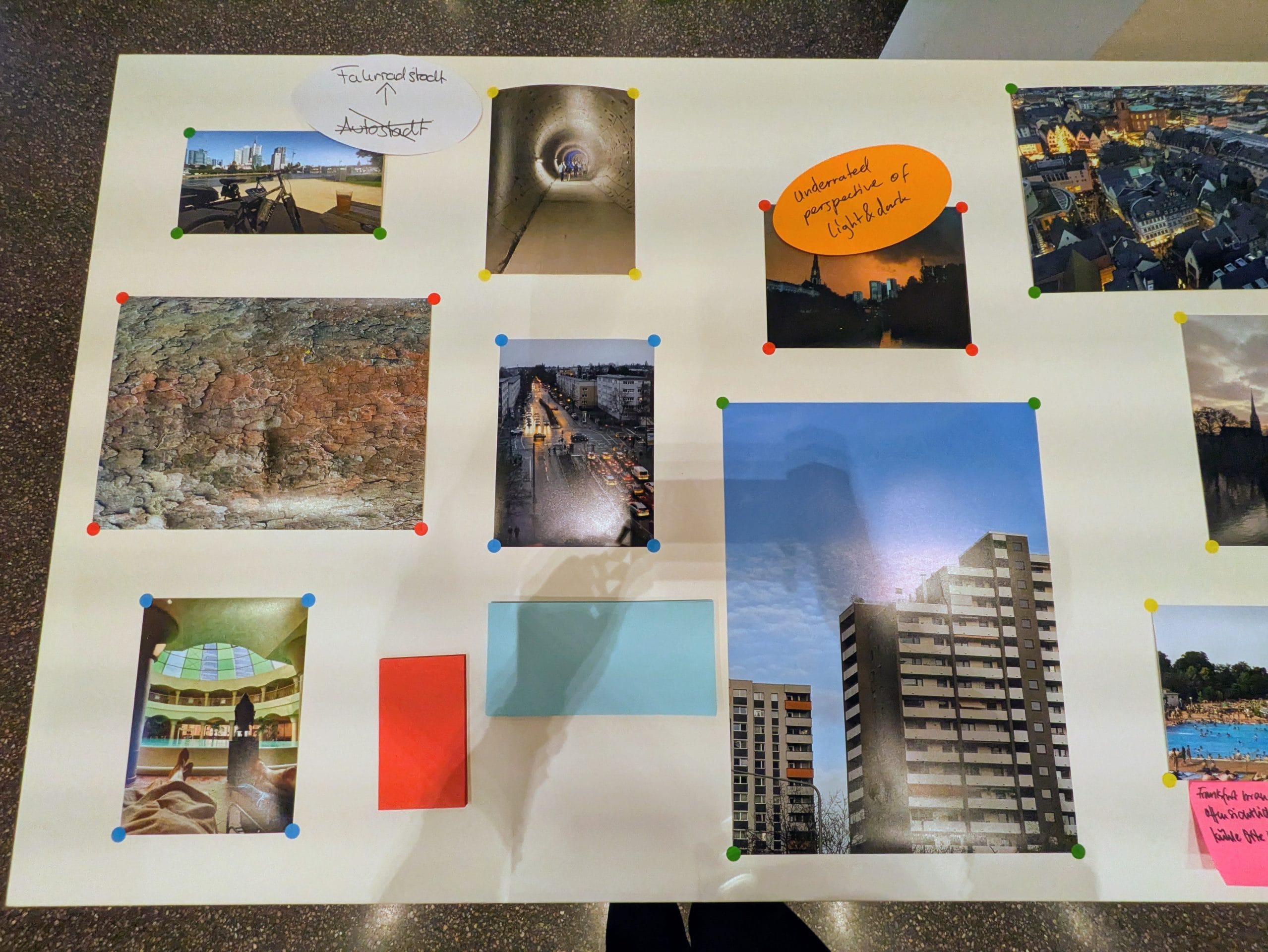
Comments on the same image reflect either reinforcing or conflicting views. Since this is done on paper, a differing opinion only makes sense if the previous comment remains. Like dialogues that gradually take shape around the Stadtbilder. Someone shares their opinion, another person joins the conversation, and the result is recorded. If someone simply discarded another’s notes out of opposition, there is no evidence of the act. There is no telling that someone thought differently about that particular Stadtbild. As part of the organizing team, I can only hope that, regardless of whether people actively participated in the conversation by writing a comment, the various Stadtbilder on display in the foyer sparked the imagination, opened up new perspectives, and stimulated the minds of those present for the discussion that followed in the room next door.
[1] The English translation of the term “Stadtbild” or its plural “Stadtbilder” does not accurately capture the original meaning. Therefore, the German term will be used here.