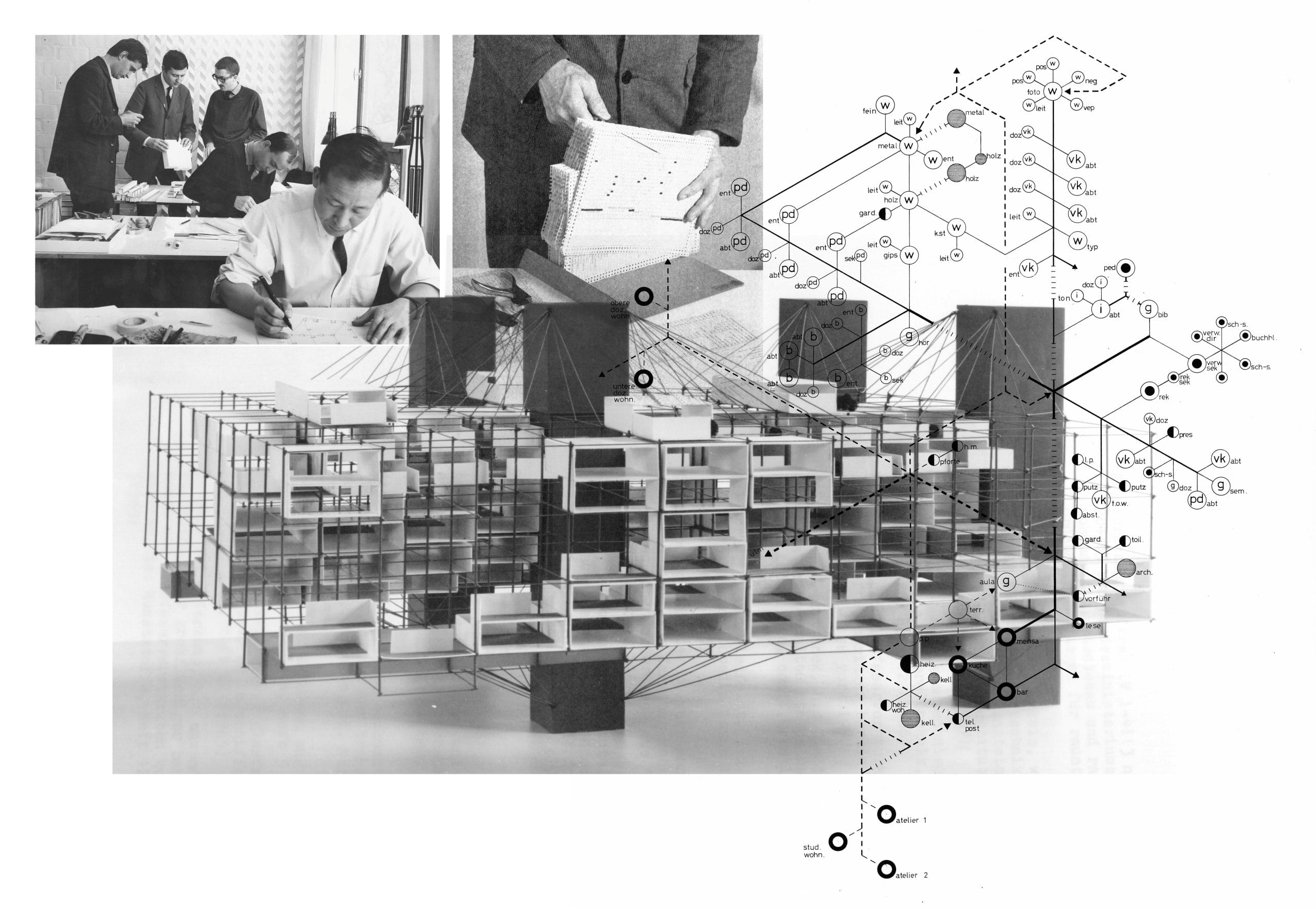
The research project reveals the Building Department of the HfG Ulm (1953–1968) – a previously underestimated site of architectural innovation. Here, architecture was not understood as artistic inspiration, but rather as a methodical experiment based on scientifically grounded information. This gave rise to the so called Ulm Model: an interdisciplinary synthesis of engineering, natural, human, and social sciences that defined architecture as both a technical and societal task and introduced new methods for integral design. Drawing on insights from cybernetics, systems, and information theory, architectural experimentation were developed on a scale ranging from the macro to the microcosm, combining vision and pragmatism.
This research project fills a gap in architectural history, reconstructing the influence of the Ulm Model on the HfG’s design work and its international impact (Design Methods Movement). These traces demonstrate how a methodically grounded education with a utopian approach continues to provide formative inspiration for architecture and teaching today.