
Maren Koehler
With a response by Pietro Cesari
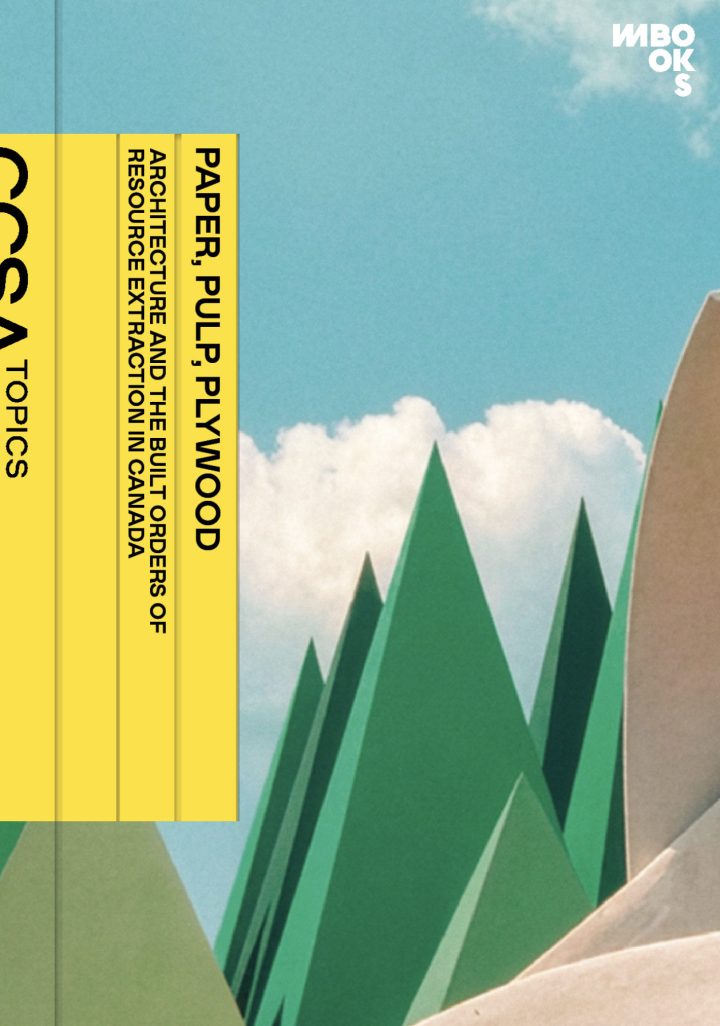
Paper, Pulp, Plywood draws a diagram. A company town built around a giant paper mill, a pavilion that resembles a forest, another made from wastepaper, an exposed-concrete headquarters tower of a forestry company, the post-war print media advertising plywood and particleboard, and the protest in a Native old growth forest are among the primary coordinates of this diagram.
Paper, Pulp, Plywood examines these sites and associated tensions in the production and consumption of abstract matter derived from trees. Through seven interlinked episodes, the book argues that architectural culture in post-war Canada was tightly bound to the political economy of the forestry industry and its techniques of resource extraction. Tracing the forestry industry’s historical ties to the colonial expansion of empire, the book reveals how the processing of trees into standardized materials conforming to architects’ specifications and industrial norms significantly reshaped the built environment as well as the ecology and the social and cultural life of the forest.
English
120 pages
M BOOKS, Weimar
1st Edition, 2026
CCSA TOPICS 10 / Reihe „Architekturen des Ordnens“, Bd. 6
ISBN 978-3-944425-50-4