
Ioanna Piniara
With a response by Sarah Borree
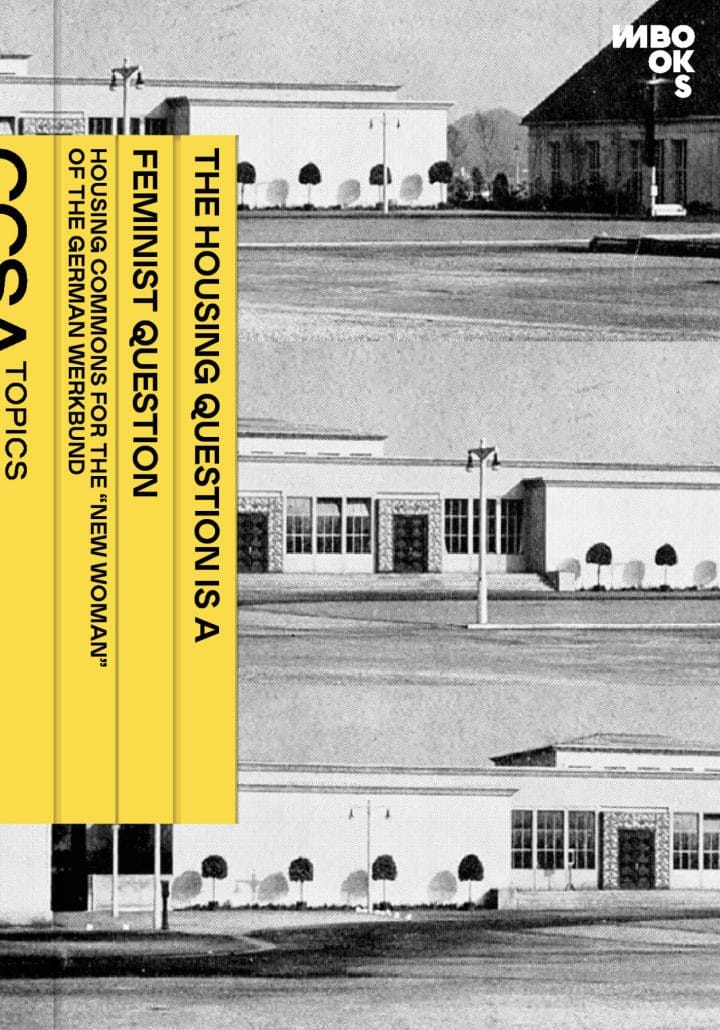
Operating at the intersection between feminist studies, architectural history and the commons discourse, this book aims to enrich the latter as a radical theory and practice for conceptualizing non-hierarchical forms of collective living. Studying the emergence of a “new woman” in the context of the First Women’s Movement and the formation of the German Werkbund in the early Weimar Republic, the research investigates two instances in the 1910s, when feminist struggles devised radical architectural practices for the social and spatial ordering of housing that accommodated feminist claims both administratively and typologically.
By addressing the housing question as a feminist question, this reading evaluates the possibilities that emerge from a spatial order that caters for women’s various roles beyond that of wife and child carer. In other words, it evaluates the potential of spatial orders to make new social orders and structures conceivable.
English
112 pages
M BOOKS, Weimar
1st Edition, 2026
CCSA TOPICS 9 / Reihe “Architekturen des Ordens”, Bd. 5
ISBN 978-3-944425-49-8